- Camper awning
- Kitchen and cooking
- Sleep and bedding equipment
- Washing and drying clothes and towels
- Noise and quiet hours at the campsite
- Camping with pets
- Trash disposal
- Cleaning and maintenance
- Tips for the first night
Last updated:
Camping Practices
A practical guide to everyday life at the campsite: awning, kitchen, sleeping setup, and what to expect on your first night in a camper.
Camper awning
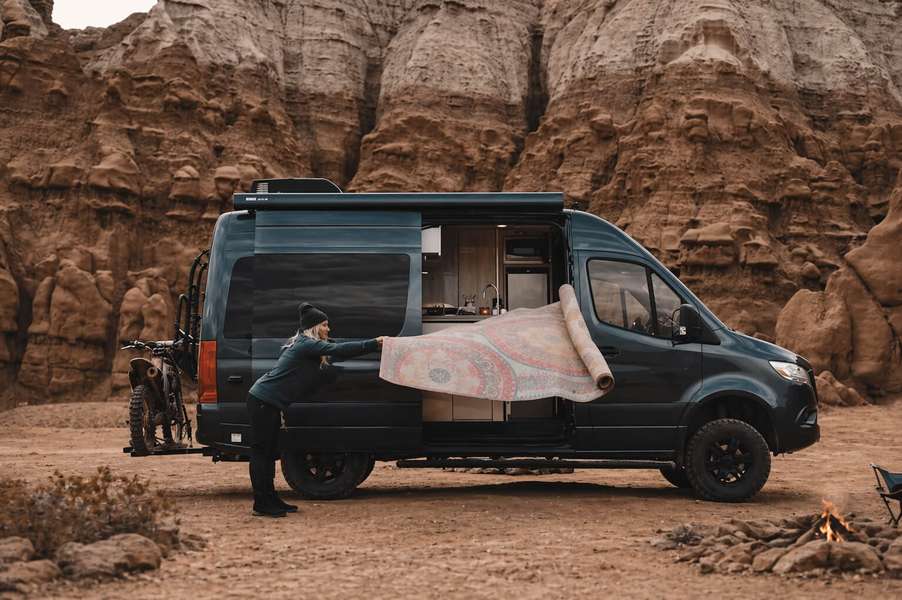
How to extend the awning
Extend it carefully with the crank, supporting it with the legs as it opens. Every camper has tie-down straps for anchoring the awning to the ground in wind. Fit them once the awning is fully extended, attaching them from the front. Some awnings have internal tensioners that further reinforce the arms in wind.
Awning use in light rain
Tilt one side of the awning downward by lowering one leg slightly, so water drains and doesn't pool.
If you don't tilt the awning, a lot of water can collect and break it from its weight.
Awning use in light wind
The straps are for extra reinforcement. When strong wind is forecast, always retract the awning. Even without wind in the forecast, don't leave it extended unattended. Sudden gusts can damage it seriously.
Retracting the awning
Before retracting, check that the awning is dry. If it rained, leave it extended a bit longer to dry, since wet canvas mildews quickly when stored. Shake it out for leaves, cobwebs, and insects. The crank works in reverse: turn slowly until the awning is fully closed. Help the awning along with its legs until about 1/3 remains open, then you can fold the legs in.
Kitchen and cooking
Lighting and cleaning the burners
Open both glass lids. Turn the knob and press it down until you hear gas hissing. While pressing, light the burner using the ignition button or a lighter.
If it goes out as soon as you release the knob, try again and release more slowly.
After cooking, clean the burners with damp kitchen paper once they've cooled. If something boils over, wipe it immediately with a damp cloth or paper so it doesn't burn on.
Washing dishes in the camper
Every camper has sponges, dish soap, and a drying rack. Campsites are equipped with dishwashing stations that make the process much easier, and we recommend using them.
The collapsible basin is ideal for carrying dishes there and back.
Sleep and bedding equipment
Roof tent
Press the release button and push upward. Before storing, remove the pillows and blanket. Locking the tent is done with a short but firm pull to engage the locking mechanism.
Drop-down bed
The drop-down bed above the seating area is large enough for two average-height adults to sleep on. Depending on the model, it lowers smoothly when pulled down, or via a button if it has an electric mechanism.
Under the mattress there's a ladder you climb up with, and it hooks onto the drop-down bed.
There are safety rails on the sides of the bed that clip onto the carabiners hanging from the ceiling. We recommend using them whether kids or adults will be sleeping up there.
Never leave small children alone on the drop-down bed unsupervised.
Never lift the bed with people on it. Before retracting, check the mattress for toys, pillows, or other bulky items. There's no room to retract the bed with them on top and you can damage it. Only thin blankets can be left on top during retraction.
Where to store extra blankets and pillows
If you don't need all the blankets, fold them and store them in the trunk in the bag provided. Extra pillows can go on the front seats while the camper is parked, or in the dedicated pillow bag.
Washing and drying clothes and towels
Campers have plenty of hooks and hangers for wet jackets and towels. Most campsites have washing machines and dryers where you can launder and dry your clothes.
Some campers also have additional drying racks and a collapsible basin if you need to hand-wash something.
We don't recommend hanging wet clothes inside the camper. The space is already limited and the moisture is hard to vent out.
Noise and quiet hours at the campsite
Most campsites have quiet hours, usually 22:00 to 08:00. During that time, no loud music, no noisy work (banging tent stakes and the like), and no loud conversations outside.
Camping with pets
Most campsites accept dogs, but often with an extra fee and a mandatory leash. Check the specific campsite's terms before booking. On site:
- Keep the dog on a leash in the common areas and the sanitary block
- Clean up after them
- Don't leave them alone in the camper for long, especially in hot weather. The camper heats up very quickly.
Trash disposal
Most campsites have separated bins for general waste, plastic/paper, and glass near the entrance or the sanitary block. Ask at check-in where they are.
There's no bin in the camper, so you hang a bag somewhere convenient. Empty it daily so it doesn't smell, especially in hot weather.
Cleaning and maintenance
Checklist before returning the camper
Make sure:
- The toilet cassette is emptied and cleaned
- Gray water is disposed of
- The camper is tidy and clean
- Interior equipment (tables, chairs, cables, hose) is stored in its place
- Your personal belongings are removed
Tips for the first night
Arrive at the campsite early, while it's still light. That way you'll have time to:
- Level the camper at your own pace
- Connect to power, if available
- Test the water, gas, and lighting
- Extend the awning and get your bearings
- Organize your luggage and sleeping arrangements
Don't worry if something seems unfamiliar. After the first day everything will come naturally.