Camper Rental for Beginners: Camper or Campervan?
You've decided you want to travel by camper. But it quickly turns out that "camper" isn't just one thing — there are campervans, semi-integrated, alcove, fully integrated... and each type has its own pros and cons.
If you're wondering which one is right for you, you'll find the answer here. We compare the two options — campervan and camper.
What's the Difference Between a Camper and a Campervan?
Before we compare, let's clarify the differences.
Campervan
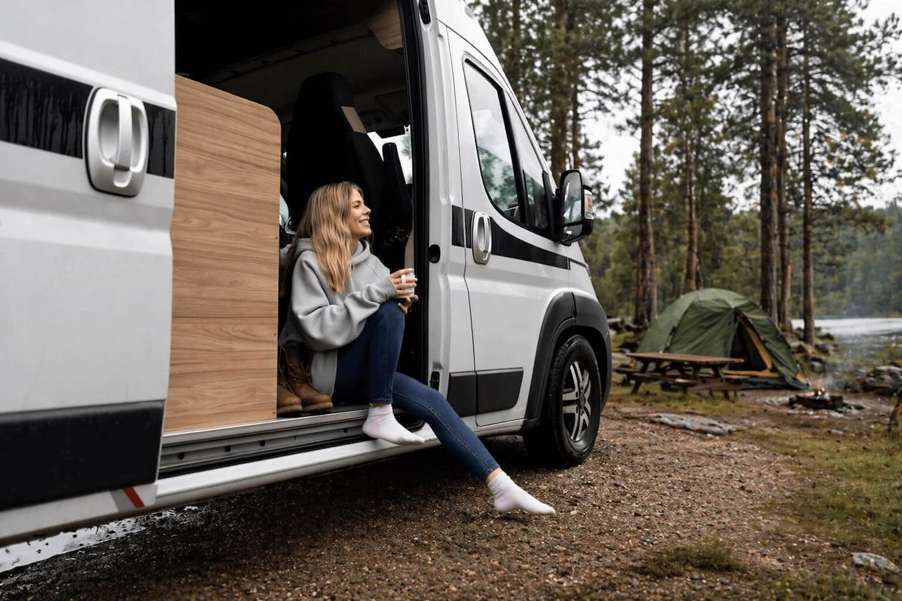
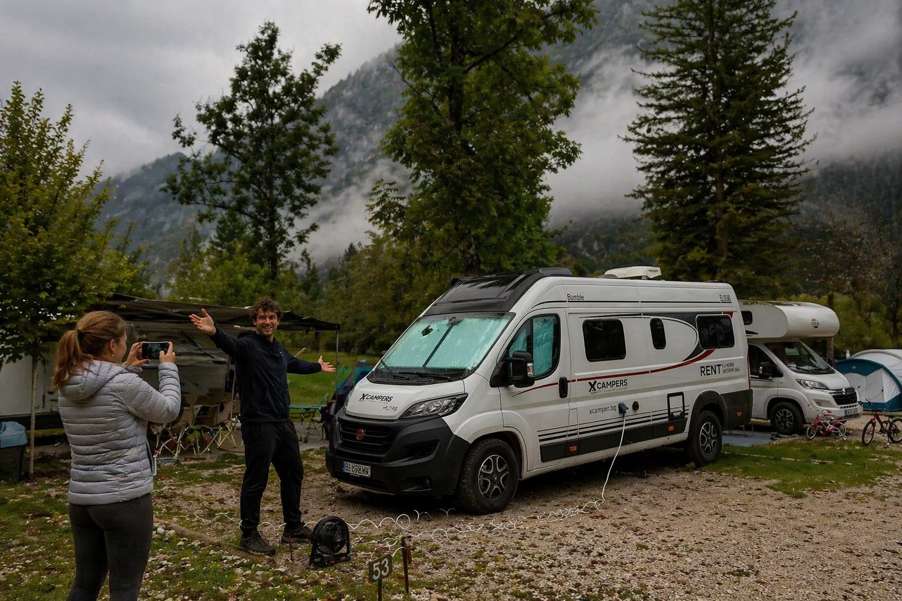
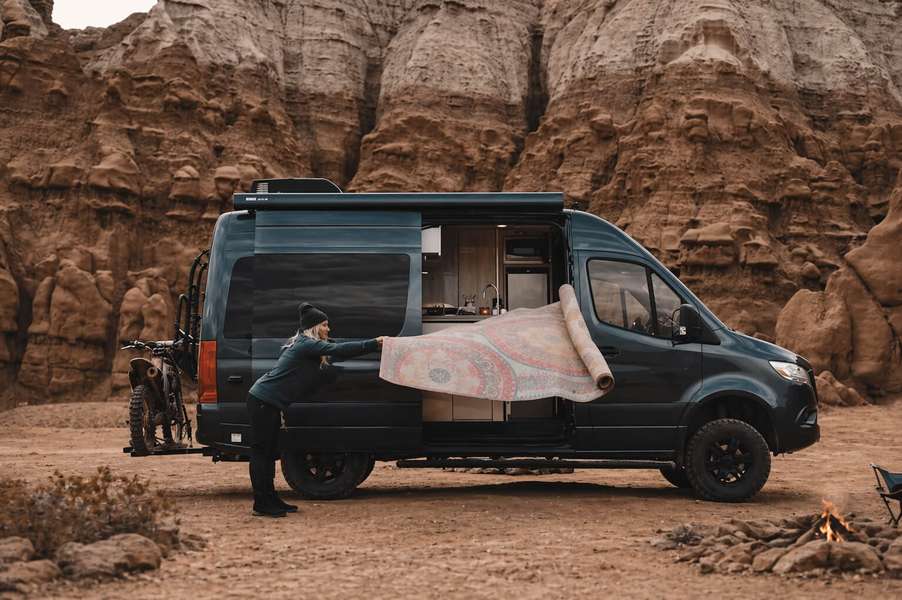
The campervan is compact — built on a van base (usually a Fiat Ducato, Mercedes Sprinter, or similar). Its length rarely exceeds 6–6.3 meters. From the outside it looks like a large van, inside — it's a fully equipped living space with kitchen, bathroom, bedroom, and lounge area.
Examples from our fleet: Campervan Carrie (Carado CV600 Pro) at 5.99 m and Campervan Bernie (Bürstner Eliseo C642) at 6.36 m.
Camper (Semi-Integrated and Integrated)
The camper is larger — usually 7+ meters. The driver's cab is connected to the living area, but the construction is wider and taller than a van. In semi-integrated models, the cab is factory-made (by Fiat, for example), while in fully integrated ones — the entire body is built by the camper manufacturer.
Example from our fleet: Camper Sunny (Adria SunLiving Lido M46 SP) — semi-integrated, 7 meters, 6 sleeping spots.
Campervan — Pros
Agility and Easy Driving
This is the van's biggest advantage. At around 6 meters long and narrower than a camper, it drives almost like a large car. You park in standard parking spots, get through narrower streets, and drive more confidently on rough roads.
If it's your first camper trip and you're nervous about driving one, the van is a good choice. More driving tips in our basics and safety guide.
Lower Fuel Consumption
Smaller size means less weight and lower consumption. Expect around 8–10 L/100 km — noticeably less than larger campers.
Perfect Size for Two or a Small Family
If you're traveling as a couple (or a couple with a child), the van is a good balance between mobility and comfort.
Lower Rental Price
The campervan usually works out cheaper — both in rental costs and overall expenses for fuel and road tolls (smaller vehicles sometimes pay lower fees).
Campervan — Cons
Less Living Space
There's no getting around the truth here — the van is narrower. The kitchen is smaller, the bathroom is compact, and the free space for moving around is limited. On a rainy day spent entirely inside, you'll feel the difference.
Less Storage Space
Cabinets and wardrobes are smaller — you need to choose your luggage wisely. More on packing in our luggage and organization guide.
Fewer Sleeping Spots
Most campervans offer 2 sleeping spots. Rarely 4.
Bathroom Compromises
The bathroom in a van is functional but small. In some models, the toilet and shower share the same space — but they transform. See Campervan Bernie (Bürstner Eliseo C642).
Camper — Pros
Spacious Interior
This is the biggest advantage. The camper offers significantly more space — a wider corridor, a larger kitchen, a larger bathroom, and usually more room for storage, sitting, and dining.
On a rainy day, you won't feel as confined — there's enough space for reading, games, or just relaxing.
More Sleeping Spots
Semi-integrated and integrated campers usually offer 4–6 sleeping spots. For example, our Camper Sunny has a fixed double bed, a drop-down bed above the lounge, and a convertible dining table — 6 spots total. Ideal for families.
Larger Fridge and Kitchen
The fridge in a camper is significantly larger (190 liters in Sunny) — enough for weekly grocery shopping. The kitchen is wider, with more work surface, making cooking more comfortable.
Full Bathroom
In a larger camper, the bathroom is usually separate, with a shower cabin, sink, and toilet. More about onboard systems in our camper life guide.
More Luggage Space
The larger camper has a proper luggage garage, plus more cabinets and niches. If you're traveling with children, the extra room for toys, strollers, and gear is invaluable.
Camper — Cons
Harder to Drive
At 7+ meters long and greater height, the camper requires more attention — especially when parking, turning, and on narrow roads. It's less stable at higher speeds.
Higher Consumption
Greater weight and a wider profile lead to higher consumption — usually 9–12 L/100 km, depending on the model and terrain.
Harder to Find Parking
With a 7+ meter camper, you won't fit into a standard city parking spot. You need to plan your stops more carefully and use designated camper zones. See our planning guide for tips on choosing a spot.
Quick Comparison
| Campervan | Camper (Semi-Integrated) | |
|---|---|---|
| Length | 5.5–6.5 m | 7+ m |
| Sleeping spots | 2–4 | 4–6 |
| Driving | Easy, like a large van | Requires more attention |
| Parking | Standard spots | Larger zones needed |
| Bathroom | Compact | Full, separate |
| Kitchen | Functional | More spacious |
| Consumption | ~8 L/100 km | ~8.5–12 L/100 km |
| Ideal for | Couples, 2+1 | Families, 4+ people |
Which One Should You Choose?
Choose a campervan if:
- You're traveling as a couple or with a small child
- You want easy driving and agility
- You're planning lots of stops and city visits
- This is your first camper trip
- You prefer flexibility and spontaneity
Choose a camper if:
- You're a family with 2+ children
- Comfort and space are a priority
- You're planning longer stays in one place
- You want a full kitchen and bathroom
- You're carrying more luggage or gear
Why Not Try Both?
If you can't decide — rent a van for your first trip. It's more forgiving for beginners and will give you a feel for life on the road. If you want more space after that — try a larger camper next time.