Last updated:
Baggage and Organization
Luggage space in the camper, especially in campervans, is limited, but it's more than you'd expect if you know how to use it smartly. This page will show you how to pack smart and avoid bringing things you don't need.
What's in every XCampers camper
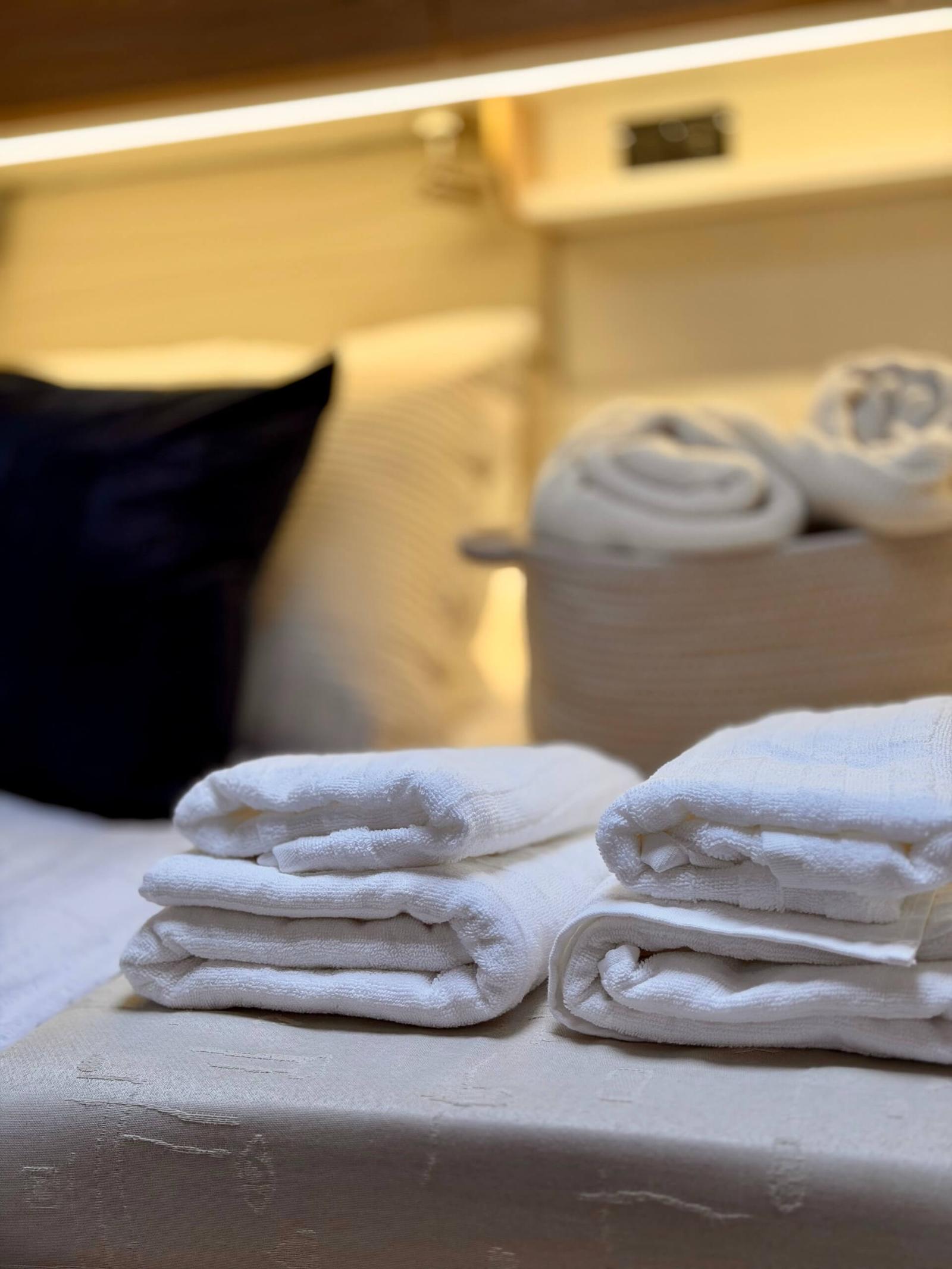
Every camper is fully equipped, and here are some of the things included. They come with the rental, so you don't need to bring them:
- Bed linens, blankets and pillows for all sleeping spots
- Bath and hand/hair towels (one per person)
- Full set of dishes for 6 people: plates, cups, cutlery, pots, pan, cutting board, knives
- Gas stove for cooking
- Levelling blocks
- Water hose and power cable + extension
- Kitchen sponges, dish soap and drying rack
- Foldable basin
For the full list, see the standard equipment page.
What baggage should I take with me in the camper?
Clothes for the season, personal documents, medications, toiletries, and comfortable shoes. Bring warm clothes for the evenings, even in summer, since temperatures drop, especially in the mountains and near water.
- Slippers to wear inside the camper are recommended, so it stays clean for longer.
- Trash bags, since there's no bin in the camper and you hang a bag.
- Playing cards or a board game for rainy evenings. The campers come with some provided.
- Clothes pegs for drying towels and clothes.
What to organize my baggage in?
Soft bags and duffels are preferable to suitcases, since they fold away. Suitcases take up valuable space, especially in campervans.
Packing cubes are very handy. They let you separate your clothes and organize them in the cabinets. Without them, clothes tend to fall out when you open the doors.
Toiletries and supplies
Use small travel sizes. Vertical space in the bathroom is limited. The camper comes with 2 rolls of toilet paper, so bring extra for a longer trip. Same goes for kitchen paper, you'll use it constantly.
Food and drinks
Plan for the first few days and bring basic dry foods you can make different dishes from. The fridge is limited, and there will be shops along the way, so don't try to pack everything at once. Every camper has spices, olive oil, and vinegar.
How to organize our baggage in the camper
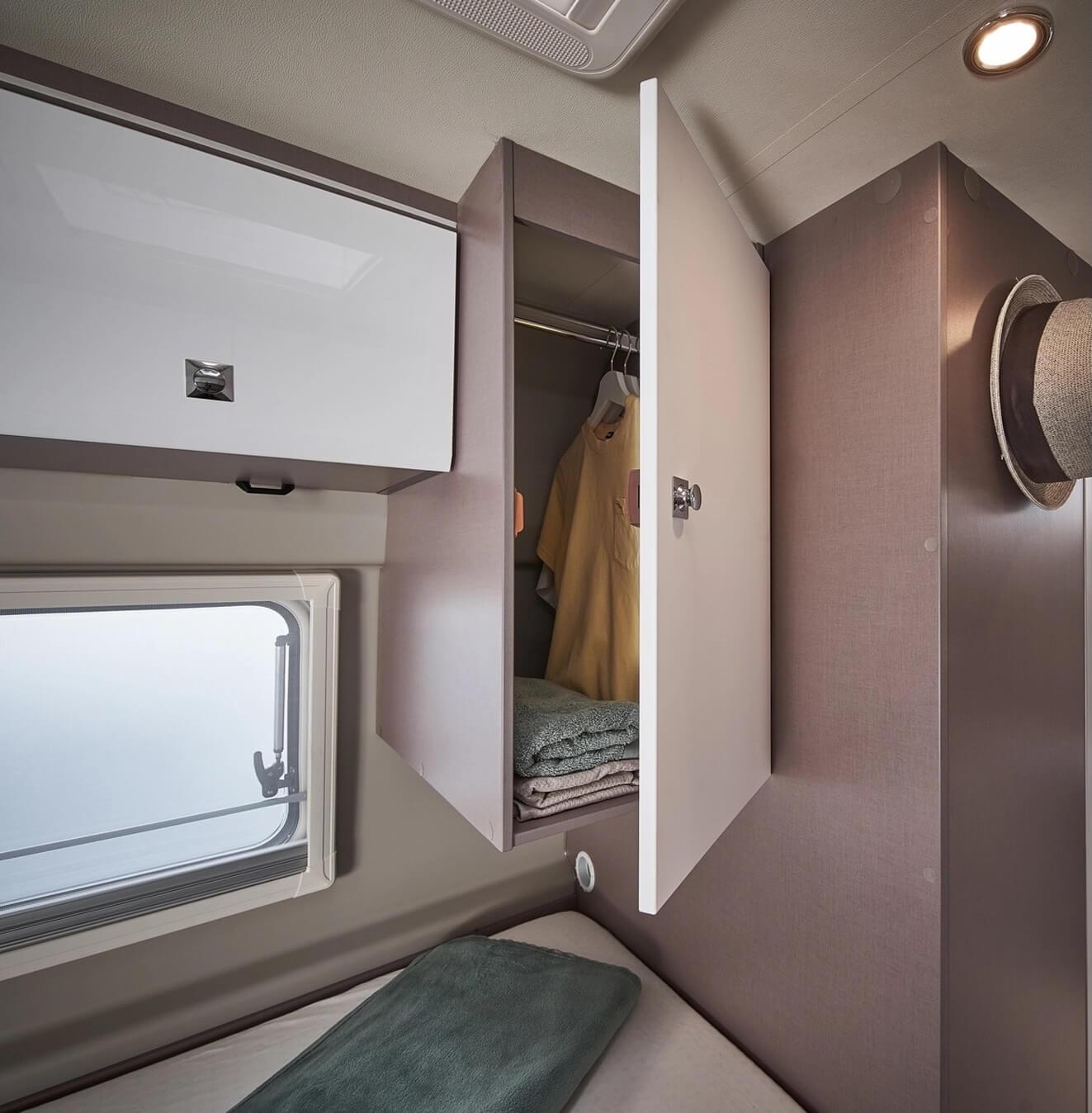
Overhead cabinets
The cabinets above the beds and seating area hold quite a bit: clothes, toiletries, medications, small items, chargers, books. Fill them evenly and don't overdo it with heavy items. Cans and jars are better off in the luggage compartment in a small box.
Behind the seating area
Once you've settled at the campsite and turned the front seats inward, there's space behind them for bulkier items: bags, backpacks, food, shoes, extra pillows (stowed in their bags).
Door spaces
In campervans, the rear door, sliding side door, and cab doors all have large pockets. They're perfect for any small items, maps, bottles, keys, books, and more.
Luggage compartment (garage)
Unlike campervans, larger campers have substantial garage spaces in the rear. Use boxes and crates to take advantage of the vertical space. They also make pulling things out easier.
Organization tips
- Distribute your clothes across the cabinets, don't keep them in the bags. This will be your home for the next several days.
- Heavy items low, light items high. Keeps the camper more stable on the road and nothing falls on your head after driving.
- Wet clothes: dry them outside on the line or on the drying rack, not in the camper.
- Food: keep it in the garage or in the cabinet near the kitchen. Easier to find later.
Drinking water
The water in the tank is suitable for washing, cooking, and bathing, but not for drinking. Bring bottled water.