- What License Do I Need and Is It Hard to Drive a Camper?
- How Do the Water, Electricity, and Toilet Work in a Camper?
- What to Bring and What's Already in the Camper?
- Where Can You Sleep With a Camper and How to Find a Spot?
- What Your First Day With an XCampers Camper Looks Like
- How Much Does It Cost to Rent a Camper?
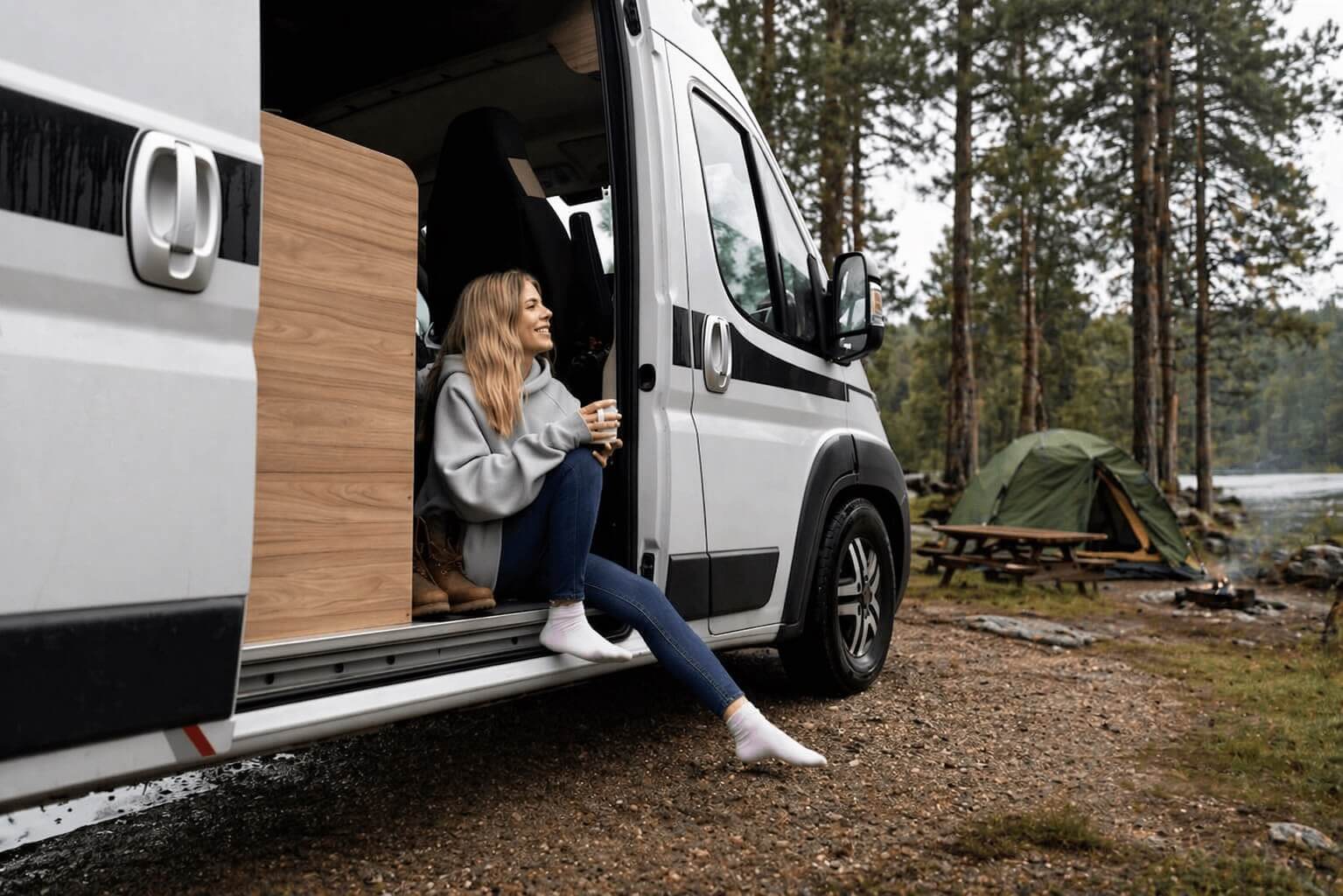
Camper Rental for Beginners: Tips for Your First Camper Rental
Thinking about trying a camper holiday but feeling a bit unsure? That's completely normal — most people worry about driving, maintaining the systems, or how camping actually works before they try it for the first time.
What License Do I Need and Is It Hard to Drive a Camper?
This is the most common question we get. The answer: a standard B license — the same one you use for your car. All our campers are under 3.5 tonnes.
The dimensions are bigger than a regular car, but you get used to it fast — after 30–40 minutes behind the wheel, you'll feel confident.
What's Different From a Regular Car
- Turns — the turning radius is wider. Take corners wider, especially right turns. Watch your side mirrors.
- Parking — have a second person guide you from outside when reversing. The mirrors don't cover all blind spots. Look for wider parking spaces.
- Height (around 2.7–3 m) — watch out for low bridges, tree branches, and petrol station canopies.
- Braking distance — longer than a regular car. Keep a larger following distance.
- Side mirrors — adjust them before you set off. You'll use them constantly.
Road Tip
Plan your route in advance and avoid narrow mountain roads on your first day. We recommend sticking to main roads for at least the first two days.
For more information, see our Basics & Safety guide.
How Do the Water, Electricity, and Toilet Work in a Camper?
It sounds complicated, but the systems are simple — and we show you everything during the camper handover. Here's what you should know beforehand:
Water
The camper has a fresh water tank (around 100 litres) that you fill with a hose at the campsite. When you pick up the camper, we fill half the tank for you — enough for 1–2 days.
A pump delivers water to the sink and shower. In our newer campers it's automatic — open the tap and it flows. In the older ones, you switch the pump on from the control panel, and it works just like at home.
Dirty water from the sink and shower goes into a separate "grey water" tank. You empty it at designated points in the campsite — usually a marked drain in the ground. It empties from a tap on the outside of the camper.
How long does the water last? About 2–3 days with normal use (cooking, washing dishes, short showers).
Electricity
At a campsite: you plug in with a cable to the mains. Everything works — lights, outlets, air conditioning, fridge.
Off-grid (wild camping): the onboard battery powers the lights, USB charging, and the water pump. The fridge in smaller campers lasts about 2 days on battery. Larger models have a gas fridge — works without electricity. Campers with solar panels can be fully self-sufficient on sunny days.
Important: In our campers, hair dryers, air conditioning, and electric grills only work when connected to the campsite mains.
Toilet
The camper toilet is a chemical cassette — a separate container that you pull out from the outside and empty at designated dump points in campsites (every 2–3 days).
In practice, it takes 5 minutes and it's not unpleasant — you add a chemical that neutralises odours. More on the camper toilet in our guide.
Heating and Hot Water
The boiler and heating run on diesel from the camper's fuel tank. They're controlled from the control panel with a single button. Hot water heats up in 10–20 minutes.
For detailed instructions on each system, see our Camper Life guide.
What to Bring and What's Already in the Camper?
The camper is fully equipped — you don't need to bring anything for the kitchen, sleeping, or daily living. Here's what's already inside:
What's in the Camper (when renting from XCampers)
- Bed linen, blankets, and pillows
- Bath towels
- Full set of plates, cups, glasses, and cutlery
- Pots, pan, cutting board, and knives
- Gas stove for cooking
- Levelling blocks
- Outdoor power extension cable
What to Bring With You
- Clothes for the season + something warmer for the evening (even in summer)
- Comfortable shoes for walking + flip-flops for inside the camper
- Food and drinks — saves stops and money
- Personal items — medications, toiletries, documents, sunscreen
- Kitchen paper — there's always something to wipe
- Soft bags or duffels instead of hard suitcases — they fit much more easily in the cupboards
What You DON'T Need
Don't bring kitchen utensils, sheets, towels, blankets, plates, or cookware. Everything is included in the price and in good condition.
More on packing and organisation in our Baggage & Organisation guide.
Where Can You Sleep With a Camper and How to Find a Spot?
In Bulgaria, overnight camper stays are allowed at campsites and designated motorhome parking areas. "Wild" camping (outside designated areas) is officially not permitted, but in practice many travellers stop for a night at quiet parking areas or near natural landmarks — as long as they don't litter, make noise, or cause a disturbance.
How to Find a Place to Sleep
Apps we use for finding overnight spots:
- Park4Night — the largest database of camper spots in Europe. Shows campsites, free spots, parking areas, and water refill points.
- Campercontact — focused on campsites and motorhome parks. Great filters by amenities.
Both have photos, prices, and real reviews from travellers.
Practical Tips for Choosing a Spot
- In summer, look for a shady spot — the camper heats up quickly in the sun. In cooler months — the opposite, look for a sunny one.
- Level the camper using the included levelling blocks — important for the fridge to work properly and for a comfortable sleep.
- Avoid muddy areas if rain is expected — you could get stuck.
- After emptying the grey water, close the tap — otherwise it flows when the pump turns on next.
- Mosquito nets on the windows are a must in summer. Use them carefully — they're delicate.
Beginner-Friendly Campsites in Bulgaria
If it's your first trip and you're not sure where to start — these campsites are tried and tested by us, and great for people with no experience:
- Camping "Kapinovski Monastery" — quiet, surrounded by greenery, 15 min from our base. Perfect for your first night.
- Camping "Veliko Tarnovo" — good facilities, clean pool, pleasant atmosphere.
- Camping "Velingrad" — mineral water, tranquillity, and beautiful nature.
- Camping "Alba" — small, cosy, with friendly owners.
For more planning tips and campsite etiquette, see our Planning guide.
What Your First Day With an XCampers Camper Looks Like
If you're wondering how it all works in practice — here's what will happen, step by step:
Camper Handover (about 1 hour)
You come to our base in Gabrovo, or we deliver the camper to you. We go through it together — the water system, toilet, heating, gas, and awning.
First Night at the Campsite
We recommend stopping at a campsite within 1–2 hours for your first night — no need for an excessively long drive.
Arriving and Setting Up
Find your spot at the campsite, level the camper with the blocks, plug in the power cable. Set up the awning and settle in — done.
The First Evening
Cook dinner on the gas stove or heat up something you brought from home. Switch on the outdoor LED lights. Hear crickets instead of traffic. This is the moment you understand why people fall in love with camper holidays.
How Much Does It Cost to Rent a Camper?
Renting a camper from us costs around €130 per day depending on the season and model. The price includes everything — bed linen, towels, and full kitchen equipment.
Additional charges:
- Cleaning fee — €100 (one-time)
- Deposit — €1,000 (refunded after returning the camper)
- What License Do I Need and Is It Hard to Drive a Camper?
- How Do the Water, Electricity, and Toilet Work in a Camper?
- What to Bring and What's Already in the Camper?
- Where Can You Sleep With a Camper and How to Find a Spot?
- What Your First Day With an XCampers Camper Looks Like
- How Much Does It Cost to Rent a Camper?